


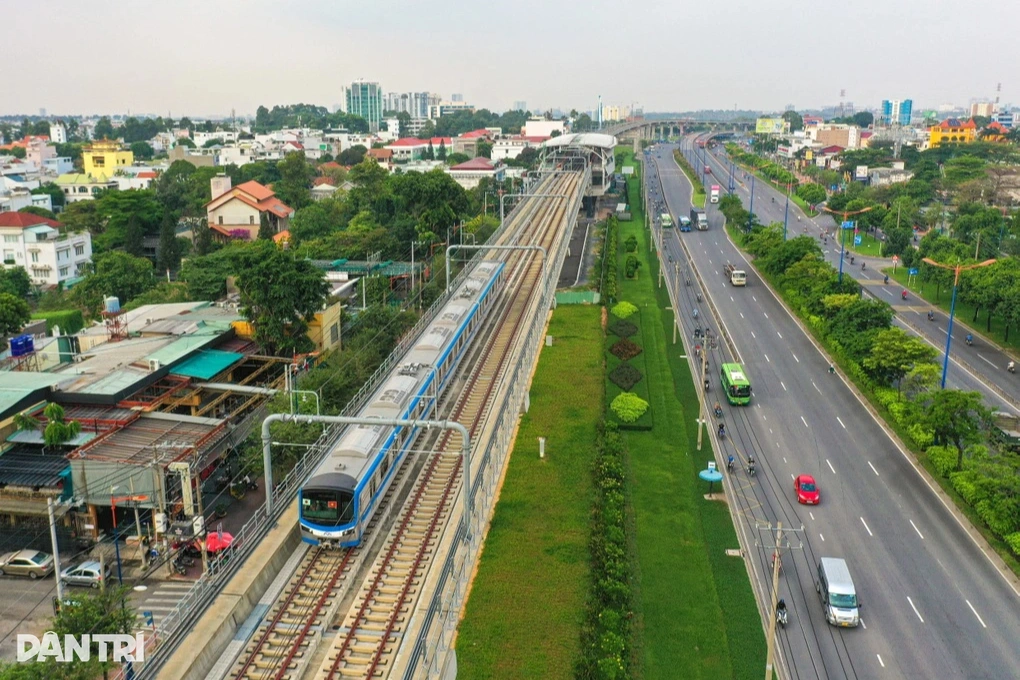
Metro Line 1 has been running for nearly two years, and apartment prices along the station have skyrocketed.
(Dan Tri Newspaper) - After nearly two years of operation of Metro Line 1 in Ho Chi Minh City, apartment prices along the route have increased sharply, with some projects seeing increases of over 400%, making housing near stations increasingly inaccessible to low- and middle-income earners.
According to observations by Dan Tri reporters , after nearly two years of operation of Metro Line 1 Ben Thanh - Suoi Tien, apartment prices along the route have increased sharply compared to the time of initial sale, with some projects seeing increases of over 400%.
For example, in the Ba Son area (Saigon ward), many apartments at Grand Marina Saigon are currently being offered for sale at up to 400-500 million VND/m2, an increase of over 50% compared to the initial launch price. Not far away, Vinhomes Golden River Ba Son is priced at over 300 million VND/m2, a 333% increase. This area has the highest apartment prices among the surveyed areas along the route.
In Thao Dien - An Phu (An Khanh ward), the increase is even higher. Masteri Thao Dien is currently priced at 135 million VND/m2, a 350% increase compared to the initial launch; Gateway Thao Dien at 204 million VND/m2, a 410% increase; and Thao Dien Pearl at 135 million VND/m2, a 170% increase.
Along the Rach Chiec - Phuoc Long - Binh Thai route (Phuoc Long ward and Thu Duc ward), apartment prices are lower but the increase is still significant. Him Lam Phu An apartments are being advertised at up to 68 million VND/m2, an increase of 183%; Lavita Charm at 69 million VND/m2, an increase of 200%; and Lavita Garden at 53 million VND/m2, an increase of 141%.
Further from the city center, in the High-Tech Park - National University - Suoi Tien area, The East Gate is priced at 46 million VND/m2, an increase of 44%; The 9 Stellars apartments are priced up to 117 million VND/m2, an increase of 60%.
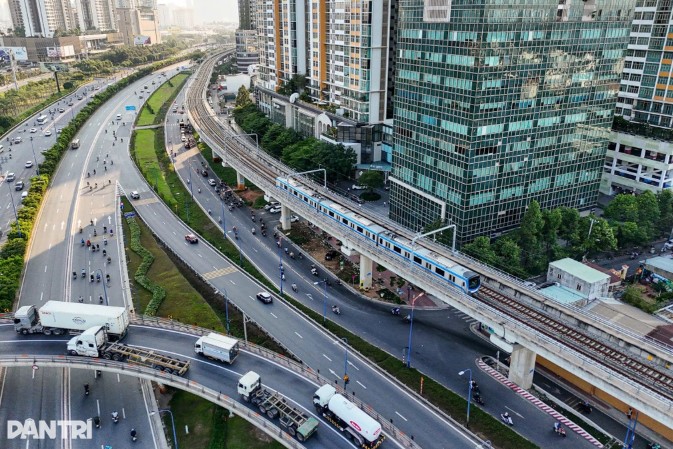
According to Batdongsan.com, the asking price for apartments within a 1km radius of Metro Line 1 and Hanoi Highway increased from VND 30.6 million/m2 in 2016 to VND 72.9 million/m2 this year, equivalent to nearly 2.4 times. In 2025 alone, after Metro Line 1 becomes operational, the asking price in this area is expected to increase by approximately 30% compared to the previous year.
The rapid increase in housing prices around the metro line is also making it increasingly difficult for middle and low-income earners to buy or rent homes near the stations. According to research by Huynh Thi Huong Lan and Nguyen Vo Van Lich from the Vietnamese-German University, out of 60 housing projects surveyed along metro line 1, only 12 projects belonged to the mid-range or affordable segment.
Notably, within an 800m walking radius of the train stations, only 2 out of 36 projects meet the criteria for social housing or affordable housing. While middle and low-income groups have a high demand for public transportation, the supply of suitable housing around the train stations is very limited.
Based on this reality, the research team proposes that Ho Chi Minh City develop a policy to increase the supply of affordable housing around public transportation routes . One solution is to require developers of commercial projects in transitional areas to allocate 10-20% of their floor area for affordable housing development, in exchange for preferential land use coefficients.
Revenue from commercial leasing at central stations can also be channeled into Transport-Oriented Development (TOD) funds for reinvesting in infrastructure and supporting housing development.
Another approach is to increase the supply of social housing in areas with convenient transportation infrastructure. Dr. Nguyen Thi Thanh Xuan, Head of the Business Law Department, Faculty of Economic Law at UEL, believes that there needs to be more flexibility in allocating land for social housing construction, especially in TOD (Transit-Oriented Development) areas.
For commercial housing projects within TOD (Transit-Oriented Development) zones, developers may be allowed to choose to allocate land for social housing within the project area or on another plot of land with suitable infrastructure outside the project. If allocated outside the project area, the relevant coefficients for the social housing land can be calculated as equivalent to those for the commercial housing project land.
According to Dr. Xuan, this approach helps localities be more proactive in land use planning, while also creating conditions for allocating social housing in locations with suitable infrastructure and transportation connections. Reducing land costs can also create more room for lowering social housing prices, increasing access to housing for the people. She noted the need for strict control over policy implementation to ensure that only those with genuine needs can own a home.
From a broader perspective, Dr. Nguyen Ngoc Hieu, coordinator of the Sustainable Urban Development program at the Vietnamese-German University, argues that TOD (Transit-Oriented Development) development needs to be linked to people's affordability and urban sustainability. This is a crucial factor in restructuring urban space towards reducing reliance on private vehicles.
According to him, this model not only helps increase access to public transportation but can also contribute to solving problems such as flooding, subsidence, and traffic congestion, thereby improving the quality of life and reducing the long-term cost burden for people.
According to experts, to increase access to housing, credit policies also need to be targeted correctly. Loan packages with reasonable interest rates could prioritize projects that meet real housing needs and are financially suitable for the people. In addition, market data needs to be more transparent, and identifying information should be developed for each product to help regulatory agencies monitor transactions, control price fluctuations, and take corrective measures when necessary.
In addition, stricter penalties are needed for manipulation, rigging, and deliberately inflating real estate prices for personal gain. When these factors are controlled, housing prices will have a basis to move in line with actual purchasing power instead of rising far beyond people's affordability.
Source: Dan Tri Newspaper.
RELATED NEWS

To attract high-spending tourists and encourage longer stays, Quy Nhon's resort real estate needs to supplement its supply of quality accommodation, diversify experiences, and better connect with its value proposition.
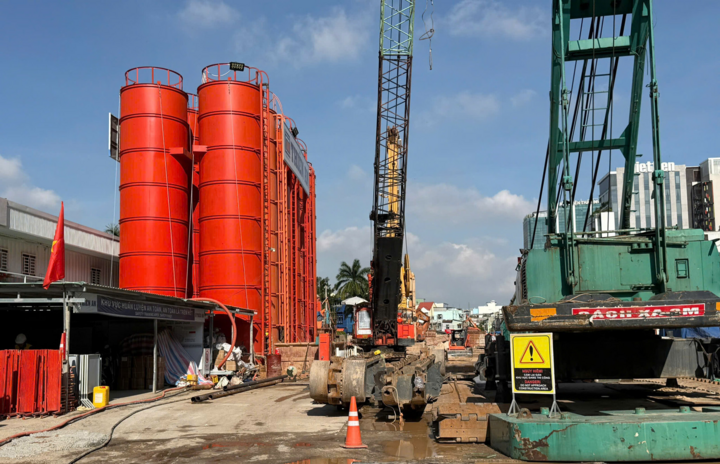
Ho Chi Minh City plans to start construction on 5 metro lines by the end of 2026. Among these, the Thu Thiem line connecting to Long Thanh Airport has the largest capital investment, at approximately 134,000 billion VND.
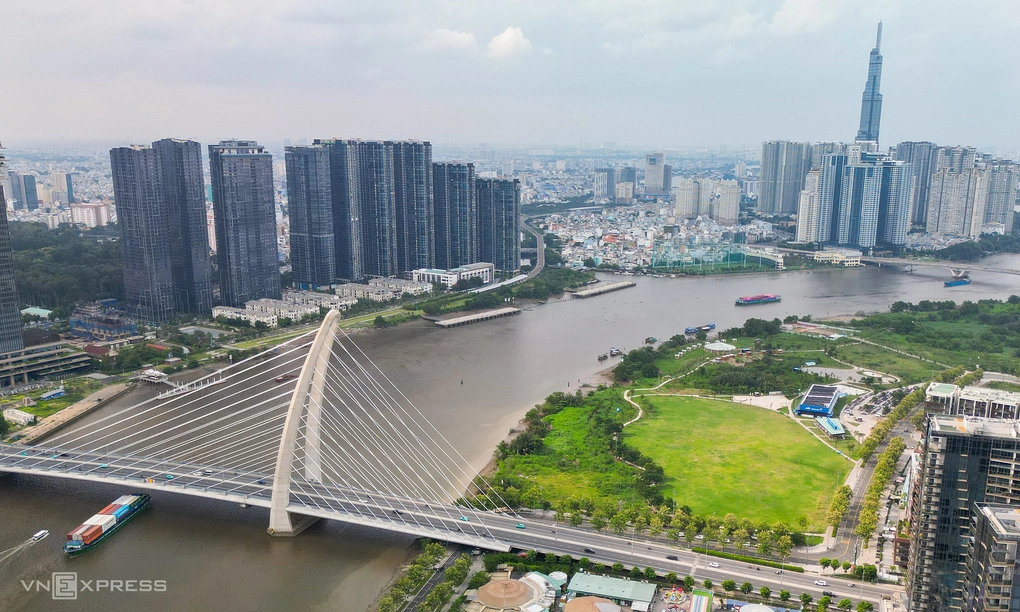
Vietnam has over 16,000 "branded" properties (including both completed and under-construction), ranking third in the world after the UAE and the US, according to Global Branded Residences.

Behind the new ranking lies significant changes in the legal framework, data, and how the real estate market in Vietnam is valued.
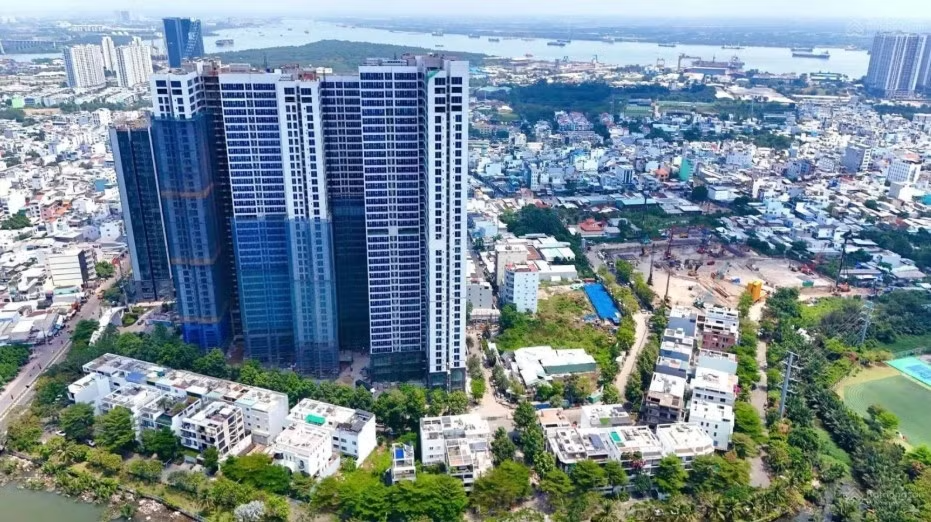
TPO - Phat Dat Real Estate Development Joint Stock Company has been granted permission to change the land use purpose of an additional 2,100 m2 of land to implement the Tan Phu Ward Housing Project, while Hung Loc Phat Real Estate Investment Joint Stock Company has changed the land use purpose of 37,170 m2 of land to implement the Apartment Complex Project in Tan Thuan Ward.

Total tax payments amounted to VND 230,000 billion, contributing nearly 9% of the national budget revenue. (Data from VNTAX system 2026).
(Dan Tri Newspaper) - Transportation infrastructure is no longer just a supporting factor but is becoming a driving force that is changing the way the real estate market develops and values.

8 infrastructure, logistics, and public space projects, with a total investment of nearly 250,000 billion VND, were launched on the morning of July 1st, coinciding with the 50th anniversary of Saigon - Gia Dinh being named after President Ho Chi Minh.