


Vietnam ranks among the top 10 real estate markets with the strongest improvements in transparency worldwide.
Behind the new ranking lies significant changes in the legal framework, data, and how the real estate market in Vietnam is valued.
Rapid Improvement in Transparency, but Not Yet in the High Transparency Group
According to the GRETI 2026 report recently published by JLL, Vietnam scored 3.15 points, ranking 50th out of 88 countries and territories, belonging to the "Semi-Transparent" group.
More notably, Vietnam is among the Top 10 markets with the strongest improvement in transparency globally during the 2024-2026 period. This group also includes Poland, Thailand, Australia, Qatar, South Korea, India, Saudi Arabia, Dubai, and Abu Dhabi.
This is a significant step forward considering Vietnam's market position before 2020. At that time, Vietnam belonged to the "Low Transparency" group, with limitations in market data, legal framework, and regulations related to foreign investor ownership of real estate . Since 2020, the market has moved to the "Semi-Transparent" group.
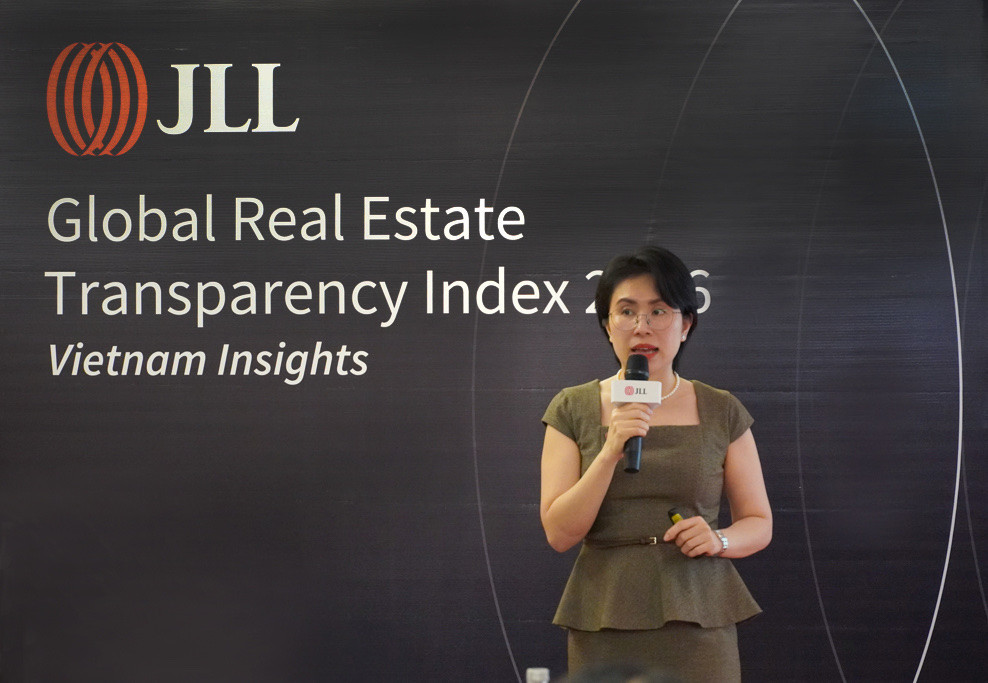
The period 2024-2026 continues to see many changes in legal frameworks and data. JLL assesses that the amended laws on land, housing, real estate business, the new Price Law, along with the information system and database on housing and the real estate market, are creating a new foundation for transparency.
The clearer the data, the faster the valuation.
The impact of transparency is not only reflected in rankings but directly relates to how investors value assets and make decisions.
According to JLL, in "Highly Transparent" markets, valuation accuracy reaches approximately 85-95%, with an average valuation time of 5-10 days. About 70% of input information comes from publicly available data, while market surveys account for 20% and expert experience about 10%.

For markets with "semi-transparent" status like Vietnam, JLL estimates valuation accuracy at 60-75%, with valuation times ranging from 10-20 days. Notably, publicly available data accounts for only about 20% of the information available, while market surveys and expert experience together account for 40%.
This gap is significant for the capital market. When data is incomplete, investors must dedicate more resources to verifying asset values, legal status, and market prospects. Higher information costs mean greater risks in the appraisal process.
This explains why transparency is increasingly becoming a competitive factor in attracting international real estate investment. JLL states that "highly transparent" and "transparent" markets currently attract over 98% of total global commercial real estate investment, while the "semi-transparent" group accounts for only about 1.3%.
The opportunity for capital increase lies in markets lacking data.
Vietnam's ranking among the top 10 fastest-improving markets shows that the direction is yielding results, but its 50th ranking out of 88 also indicates a long road ahead.
JLL suggests that six pillars need continued focus: digitizing land records; building a unified nationwide real estate registration system; applying the International Property Management System (IPMS) international valuation standard; publishing data on commercial real estate credit; strengthening green building certification linked to planning and databases; and raising disclosure requirements for listed companies.
Meanwhile, international capital flows are showing a positive response to markets with rapid improvement. According to JLL, the Asia-Pacific region accounts for half of the top 10 markets with the best transparency improvements globally; cross-border investment flows into the region have recovered strongly, with direct transactions in some markets like Vietnam reaching record highs.
Thus, Vietnam's progress is not just about rankings. Greater transparency means a clearer ability to determine asset prices, shorten appraisal processes, and reduce risks for investors. As data and valuation gaps continue to narrow, the room for Vietnamese real estate to access international capital flows will also expand.
JLL believes that in the context of a volatile global economy and geopolitics, transparency is increasingly becoming a crucial factor in capital allocation decisions, along with the development of AI, new real estate segments, energy requirements, and transparency in the credit market.
Source: Nguoi Quan Sat.
RELATED NEWS
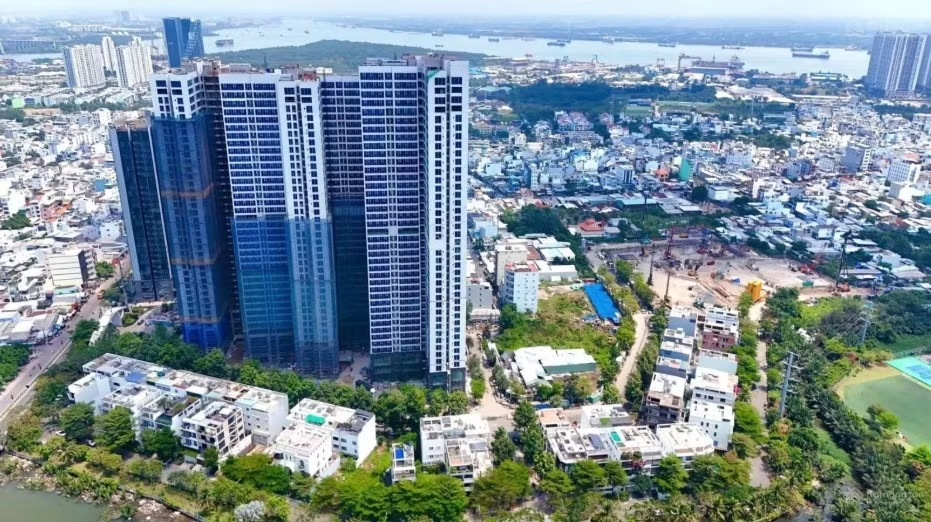
TPO - Phat Dat Real Estate Development Joint Stock Company has been granted permission to change the land use purpose of an additional 2,100 m2 of land to implement the Tan Phu Ward Housing Project, while Hung Loc Phat Real Estate Investment Joint Stock Company has changed the land use purpose of 37,170 m2 of land to implement the Apartment Complex Project in Tan Thuan Ward.

Total tax payments amounted to VND 230,000 billion, contributing nearly 9% of the national budget revenue. (Data from VNTAX system 2026).
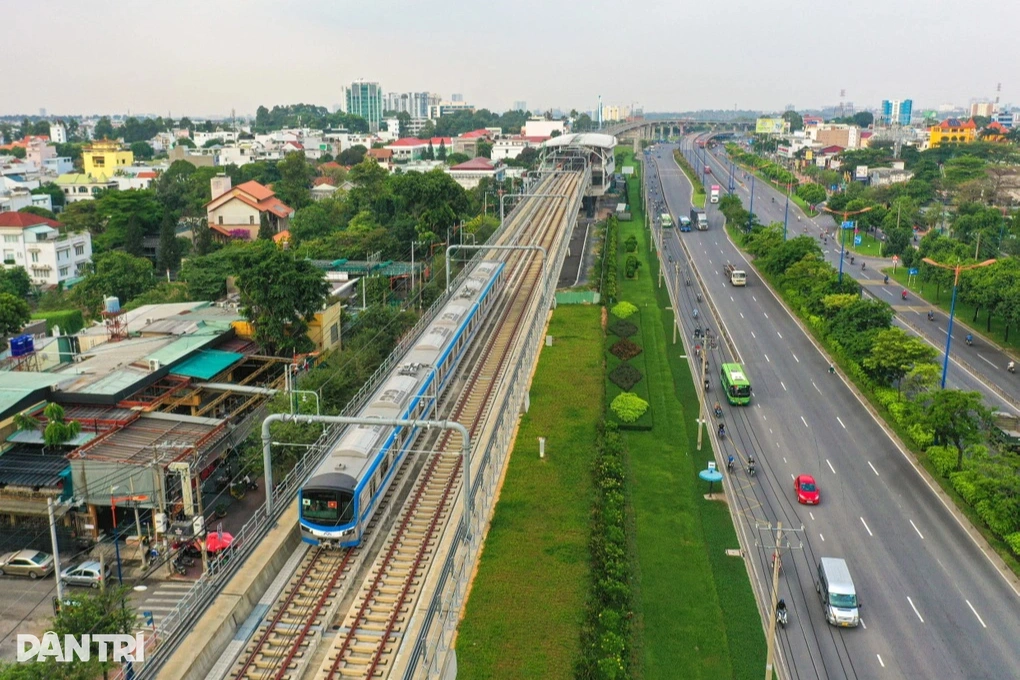
(Dan Tri Newspaper) - Transportation infrastructure is no longer just a supporting factor but is becoming a driving force that is changing the way the real estate market develops and values.

8 infrastructure, logistics, and public space projects, with a total investment of nearly 250,000 billion VND, were launched on the morning of July 1st, coinciding with the 50th anniversary of Saigon - Gia Dinh being named after President Ho Chi Minh.
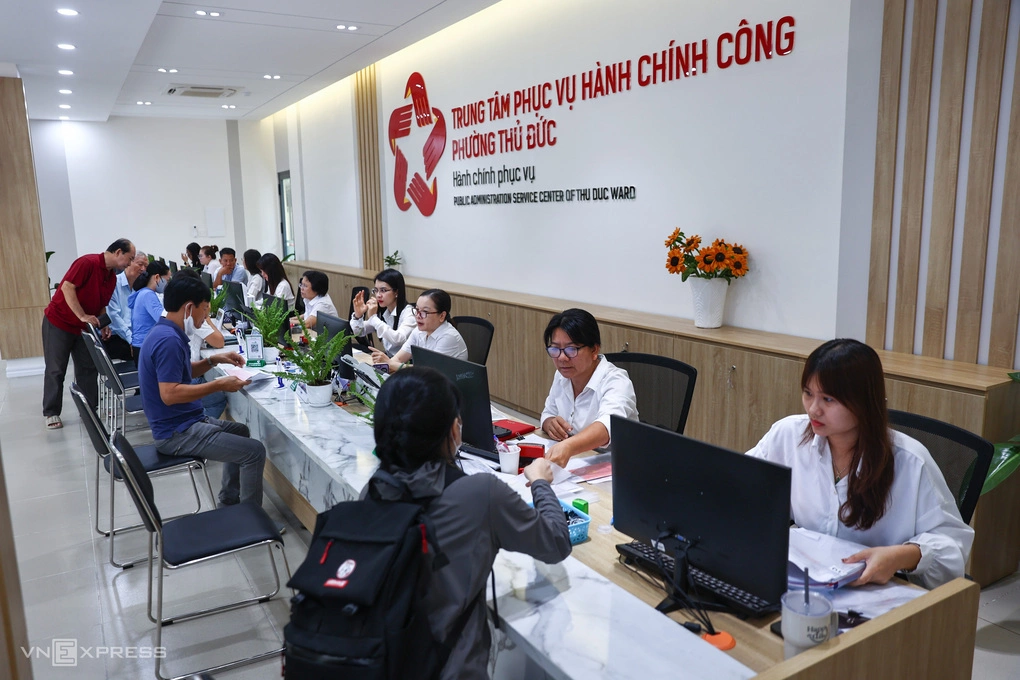
Ho Chi Minh City has decentralized 26 land-related tasks to the commune level, with many procedures such as land allocation, reclamation, and land use conversion being decided by the chairperson of the commune/ward People's Committee according to their authority.
Ho Chi Minh City - The Ho Tram - Long Thanh International Airport expressway, with a total investment of nearly 47,000 billion VND, will select an investor under special circumstances and commence construction on July 1st.
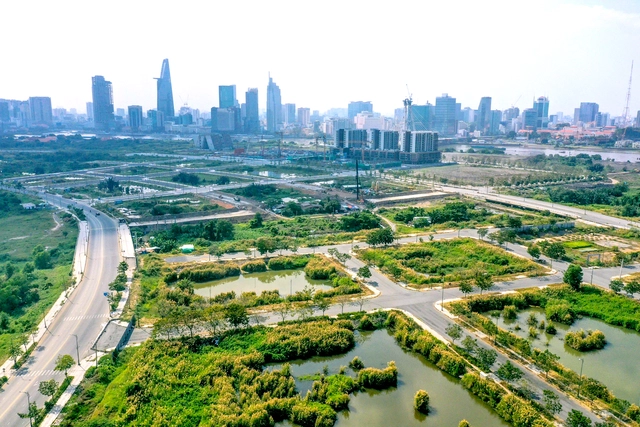
The Ho Chi Minh City People's Committee has just issued a plan to auction off 8 land plots in the Thu Thiem new urban area, An Khanh ward
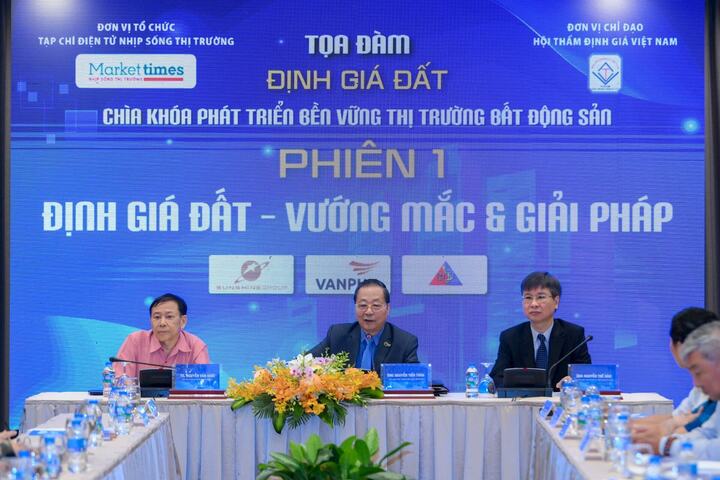
(VTC News) - Theo các chuyên gia, để định giá đất chính xác, cần ban hành bộ tiêu tiêu chuẩn định giá riêng cho từng nhóm bất động sản.